


Introduction
Organizations that invest in an Employee Experience Platform (EEP) usually do so with genuine ambition. They want better communication, higher engagement and a workforce that feels connected.
The platform gets selected, the project kicks off and six months after launch – traffic has plateaued, content is stale and the internal communication team is quietly wondering what went wrong.
The platform itself is rarely the problem.
(If you’re still evaluating whether an EEP is the right investment for your organization, start here. This post is for those who’ve moved past that question.)
What is an Employee Experience Platform and why do so many fail?
An Employee Experience Platform (EEP) is a centralized digital environment that brings together communication, information access, employee recognition and organizational connection. It ensures every employee, regardless of role, location or device, has a reliable digital home for their working day.
Most EEP projects are treated as IT deployments. They succeed technically – on time and on budget – but fail as communication platforms. This happens because nobody built the content strategy, governance model or editorial ownership structure needed to keep the platform alive post-launch.
The Reality Check: Employees return to a platform for one reason: it gives them something they actually need. A homepage frozen in the week of launch or HR documents of uncertain currency are reasons to stop opening the app, not reasons to return.
The governance question nobody asks early enough
Most organizations measure success by traffic (page views and session length). These numbers answer the wrong question. High traffic tells you employees opened the platform; it tells you nothing about whether communication is working.
Three metrics that actually matter:
-
Audience-specific reach: A company-wide update that reached 94% of office staff but only 31% of warehouse staff is not a success. You need data broken down by location, role and department.
-
Content engagement rate: Click-throughs, poll responses and form completions tell you if content is landing or being scrolled past.
-
Unprompted return visits: If traffic only spikes after a company-wide email link, the platform isn’t part of the daily work rhythm. If employees return habitually, it is.
Does mobile access solve the non-desk worker problem?
No. Mobile access is necessary, but not sufficient.
While most EEP vendors offer a mobile app, what separates successful organizations is content strategy. A production worker on a break doesn’t want the same homepage as a finance manager. Reaching non-desk workers requires deliberate audience segmentation:
-
Site-specific news.
-
Role-relevant HR updates.
-
Shift communications reflecting their actual work cadence.
What do successful EEP implementations have in common?
Across organizations that deploy Involv intranet and achieve lasting engagement, the pattern is consistent:
-
Comms were involved from day one: Internal communication acted as the architects of the content model, not just end-users.
-
Success was defined in advance: Targets were specific (e.g., “By Q4, 70% of non-desk employees will log in weekly”).
-
The 90-day plan: An editorial calendar was in place before go-live.
-
It was treated as organizational change: Launch involved a multi-touch campaign and visible leadership endorsement, not just a single email.
The platform enables the experience. Your team delivers it.
An EEP like Involv intranet removes every technical barrier – from audience targeting to analytics. But infrastructure is not experience. Transforming your digital work environment requires treating the platform as a communication discipline, not an IT project.
Where to go from here
If this post resonated, it’s probably because you recognize one of these gaps in your own organization – a platform that launched with momentum and lost it, metrics that look fine but don’t tell the real story, or a non-desk workforce that never quite made it into scope.
The good news: these are solvable problems. And the right platform makes solving them significantly easier.
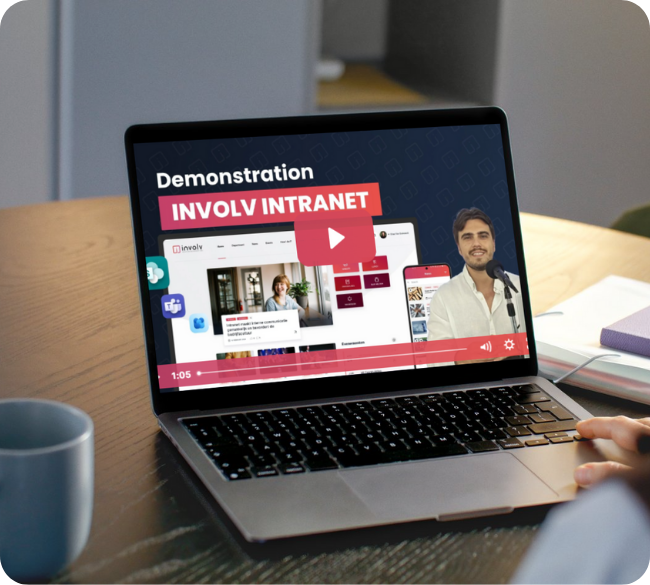
Involv intranet gives you the audience targeting, editorial tools and analytics to turn good intentions into measurable engagement – for every employee, whether they’re at a desk or on the floor.
Start with one question: does your current setup have a named owner, a content calendar, and a defined success metric for the next 90 days? If not, it might be time to look at what a purpose-built EEP can do differently.
Why do employees stop using the intranet after launch?
The most common cause is stale content. If they find the same news twice, they stop looking. The second cause is irrelevance – mixing factory shift updates with HQ announcements trains employees to tune out.
What is the difference between an Intranet and an EEP?
A traditional intranet is a one-way broadcast. An Employee Experience Platform is bidirectional and measurable. It supports feedback, confirms whether critical messages were read and connects employees to culture, not just documents.
What is the difference between SharePoint and an EEP?
SharePoint is a foundation for document management. Out of the box, it lacks intranet navigation, news targeting, and engagement features. Involv intranet adds 60+ purpose-built components on top of SharePoint, turning your existing Microsoft 365 investment into a working EEP.